
Home > Products > Fried Food Machinery >
Features
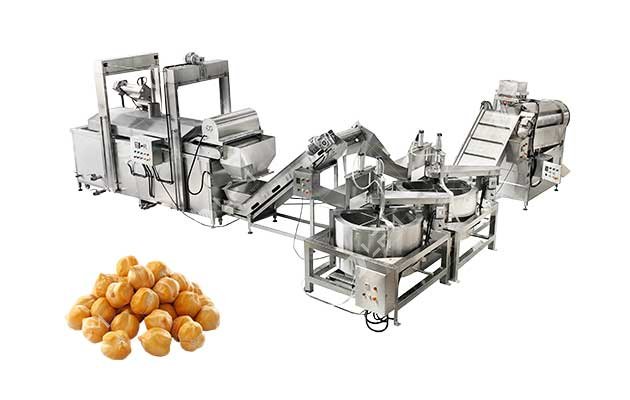
Chickpeas are a legume prized for their high nutritional value and unique texture; with appropriate processing, they can be transformed into crispy snacks, seasoned chickpeas, and various ready-to-eat products. As consumer interest in high-protein, plant-based, and healthy snacks grows, the market demand for processed chickpea products is steadily rising. For food processing plants aiming for stable output and large-scale operations, a chickpea frying line enables the transition from traditional manual processing to a more continuous, standardized industrial production model.
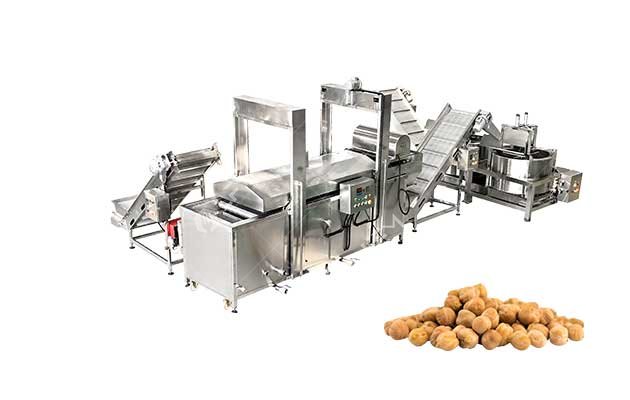
Unlike standard frying equipment, a chickpea frying line requires a tailored design that accounts for factors such as chickpea size, moisture content, pre-treatment status, and the desired crispiness of the final product. Depending on the factory's production capacity, investment budget, and automation requirements, the system can be configured as semi-automatic equipment or as a continuous, fully automated chickpea frying line. The production line primarily comprises core processes—frying, de-oiling, and seasoning—with the option to integrate additional equipment for cooling, conveying, screening, and packaging based on specific product requirements.
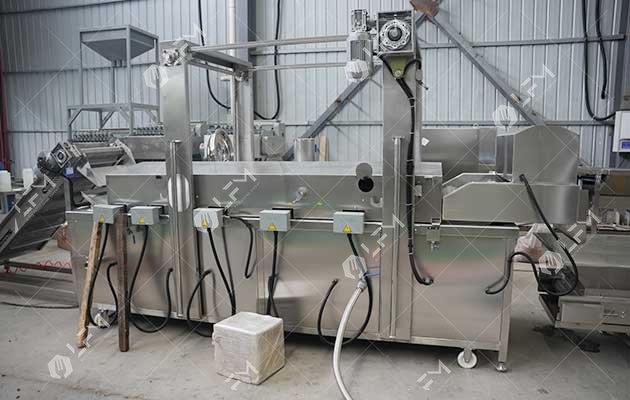
Before production begins, sorted chickpeas must be prepared according to product specifications. Maintaining uniform grain size helps ensure consistent heating during the subsequent frying process. Equipment such as elevators and conveyors is used to continuously transport the chickpeas to the next processing stage, thereby minimizing manual handling.
If using dried chickpeas, additional pre-treatment steps—such as soaking and steaming—may be incorporated based on the product formula to bring the chickpeas to a state suitable for frying.
2. Deep-Frying of Chickpeas
Deep-frying is the core stage of the chickpea frying production line. Pre-treated chickpeas enter the chickpea frying equipment, where the frying process takes place under controlled oil temperatures and conveyor speeds.
During frying, the internal moisture content of the chickpeas gradually decreases, and a structure with the desired hardness and crispiness forms on the surface, accompanied by the development of a distinctive, toasted aroma. Industrial frying equipment allows for the adjustment of oil temperature, frying time, and conveyor speed, ensuring consistent processing results across different batches.
3. De-oiling
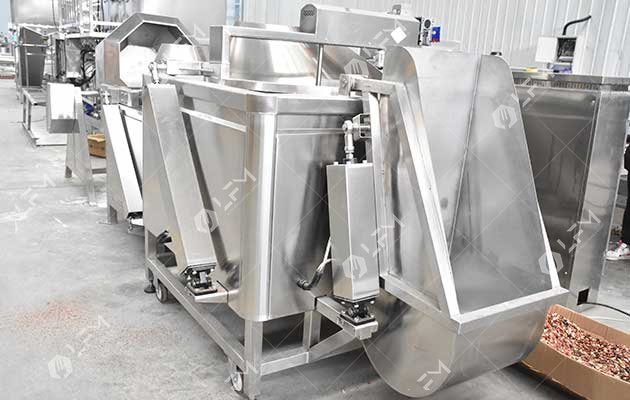
After frying, a certain amount of cooking oil typically adheres to the surface of the chickpeas; therefore, they must undergo a de-oiling process to make them drier.
De-oiling not only reduces the greasiness of the finished product's surface but also minimizes issues with uneven seasoning adhesion caused by excess oil during the subsequent flavoring stage.
4. Cooling
After frying and de-oiling, the chickpeas are at a high temperature. Depending on the packaging method and product formulation, a cooling conveyor can be installed to gradually lower the product temperature to a level suitable for seasoning or packaging.
5. Seasoning
After cooling, the chickpeas enter the seasoning machine, where flavorings are added based on the product's target positioning. Common flavor profiles include original, salty, spicy, barbecue, and various complex blends.
The seasoning machine ensures thorough contact between the chickpeas and the seasonings through drum tumbling or continuous mixing, thereby achieving uniform flavor distribution. Seasoning formulas can be adjusted to suit the tastes of different markets, allowing a single production line to manufacture a variety of products.
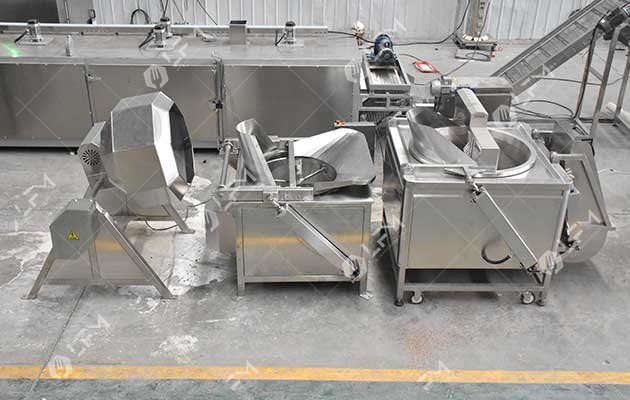
Stable frying parameters. Continuous chickpea frying equipment maintains consistent processing conditions and allows for the control of frying results by adjusting temperature and conveyor speed, making it suitable for large-scale production.
Flexible automation levels. Small-scale food processing plants can opt for streamlined semi-automated solutions (200 kg/h), while medium-to-large enterprises can configure fully automatic chickpea frying line—covering conveying, frying, de-oiling, seasoning, and packaging—to achieve continuous production (500–1,000 kg/h).
Scalable equipment. Beyond the core frying, de-oiling, and seasoning units, additional equipment such as washing, pre-processing, cooling, sorting, and packaging systems can be integrated based on specific production needs, with layouts optimized for available floor space and target capacity.
Unlike standard frying equipment, a chickpea frying line requires a tailored design that accounts for factors such as chickpea size, moisture content, pre-treatment status, and the desired crispiness of the final product. Depending on the factory's production capacity, investment budget, and automation requirements, the system can be configured as semi-automatic equipment or as a continuous, fully automated chickpea frying line. The production line primarily comprises core processes—frying, de-oiling, and seasoning—with the option to integrate additional equipment for cooling, conveying, screening, and packaging based on specific product requirements.
Chickpea Frying Line Working Flow:
1. Raw Material Preparation and ConveyingBefore production begins, sorted chickpeas must be prepared according to product specifications. Maintaining uniform grain size helps ensure consistent heating during the subsequent frying process. Equipment such as elevators and conveyors is used to continuously transport the chickpeas to the next processing stage, thereby minimizing manual handling.
If using dried chickpeas, additional pre-treatment steps—such as soaking and steaming—may be incorporated based on the product formula to bring the chickpeas to a state suitable for frying.
2. Deep-Frying of Chickpeas
Deep-frying is the core stage of the chickpea frying production line. Pre-treated chickpeas enter the chickpea frying equipment, where the frying process takes place under controlled oil temperatures and conveyor speeds.
During frying, the internal moisture content of the chickpeas gradually decreases, and a structure with the desired hardness and crispiness forms on the surface, accompanied by the development of a distinctive, toasted aroma. Industrial frying equipment allows for the adjustment of oil temperature, frying time, and conveyor speed, ensuring consistent processing results across different batches.
3. De-oiling
After frying, a certain amount of cooking oil typically adheres to the surface of the chickpeas; therefore, they must undergo a de-oiling process to make them drier.
De-oiling not only reduces the greasiness of the finished product's surface but also minimizes issues with uneven seasoning adhesion caused by excess oil during the subsequent flavoring stage.
4. Cooling
After frying and de-oiling, the chickpeas are at a high temperature. Depending on the packaging method and product formulation, a cooling conveyor can be installed to gradually lower the product temperature to a level suitable for seasoning or packaging.
5. Seasoning
After cooling, the chickpeas enter the seasoning machine, where flavorings are added based on the product's target positioning. Common flavor profiles include original, salty, spicy, barbecue, and various complex blends.
The seasoning machine ensures thorough contact between the chickpeas and the seasonings through drum tumbling or continuous mixing, thereby achieving uniform flavor distribution. Seasoning formulas can be adjusted to suit the tastes of different markets, allowing a single production line to manufacture a variety of products.
Key Features of Chickpea Frying Line:
Custom-designed for chickpeas. Given that the granular structure and processing characteristics of chickpeas differ significantly from materials like potato chips or nuts, the production line is not merely an adaptation of standard frying equipment; instead, it is configured based on the material's properties, the desired texture, and production capacity.Stable frying parameters. Continuous chickpea frying equipment maintains consistent processing conditions and allows for the control of frying results by adjusting temperature and conveyor speed, making it suitable for large-scale production.
Flexible automation levels. Small-scale food processing plants can opt for streamlined semi-automated solutions (200 kg/h), while medium-to-large enterprises can configure fully automatic chickpea frying line—covering conveying, frying, de-oiling, seasoning, and packaging—to achieve continuous production (500–1,000 kg/h).
Scalable equipment. Beyond the core frying, de-oiling, and seasoning units, additional equipment such as washing, pre-processing, cooling, sorting, and packaging systems can be integrated based on specific production needs, with layouts optimized for available floor space and target capacity.
Technical Data
FAQ
1, How much is the machine cost? Answer: Different models have different price, just tell us your requirement, our sale will suggest you suitable model and price. 2, What is the raw material of your machine? Answer: Our machines are made of stainless steel material, if you have special requirement for the machine, just feel free to tell us. 3, What if the voltage can't fit our country? Answer: The voltage can be customized, just tell us before the machine is made. 4, For the frying machine, which heating way is better? Answer: Dear, we have gas heating and electric heating, also can be customized. You can choose the suitable one according to your need.
Leave Your Message
If you are interested in our machine or any question, don't hesitate to contact us.